
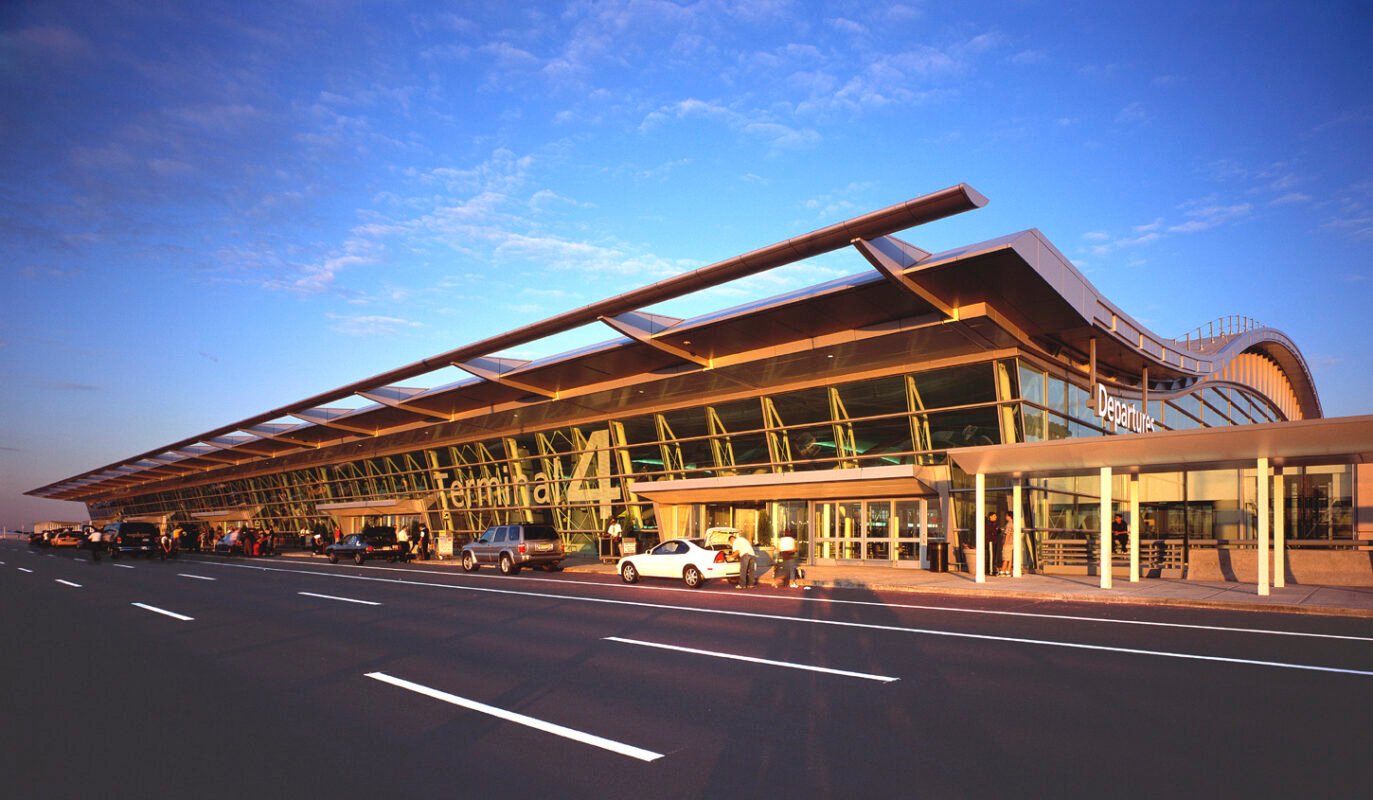
WHY TERMINAL 4 BEHAVED DIFFERENTLY IN 2026 (AND WHY OLD PICKUP LOGIC FAILED)
Terminal 4 Is No Longer a “Pickup Location” — It’s a Controlled Traffic System
At John F. Kennedy International Airport, Terminal 4 stopped functioning like a traditional arrival terminal long before 2026. What changed this year is that informal flexibility disappeared.
Terminal 4 now operates as a managed traffic environment, where enforcement behavior, arrival clustering, and roadway timing matter more than proximity to exits. Executives who still think in terms of “closest curb” or “fastest exit” experience delays not because traffic is worse — but because decision logic hasn’t adapted.
This shift explains why experienced chauffeurs outperform navigation apps and why app-based pickups fail disproportionately at this terminal.
International Arrival Clustering Became the Primary Constraint
Terminal 4 handles the densest concentration of long-haul international arrivals at JFK, driven largely by Delta Air Lines and aligned alliance partners.
In 2026, the issue is no longer customs alone — it’s release synchronization:
Multiple widebody flights clear CBP within overlapping windows
Passenger flow spikes are compressed into short periods
Landside roadway demand increases faster than enforcement tolerance
This creates a system where timing accuracy matters more than physical access. Vehicles arriving five minutes too early are now penalized more heavily than vehicles arriving ten minutes late.
Enforcement Is Now Predictive, Not Reactive
A critical change in 2026 is how curbside enforcement operates.
Under direction from the Port Authority of New York and New Jersey, enforcement officers no longer respond only to congestion — they anticipate it.
That means:
Vehicles are moved before congestion forms
Dwell tolerance varies by time of day, not signage
Recovery loops are eliminated during peak windows
In previous years, chauffeurs could “absorb” a timing error by circulating within the terminal loop. In 2026, mistimed entry often results in forced exit from airport property altogether.
This single operational change explains most executive pickup failures at Terminal 4.
The Parking Garage Shifted From Solution to Variable
The Terminal 4 garage did not become unusable — it became conditional.
Operationally, the garage now prioritizes:
Short-term parking circulation
Revenue turnover
Internal flow over curbside relief
For executives, this means garage pickup is no longer a default “safe choice.” It only works when entry timing is synchronized with passenger release.
Chauffeurs entering the garage early now experience:
Internal queuing
Delayed elevator access
Missed synchronization with passengers still in CBP
This is why some executives report slower garage pickups in 2026 despite choosing them to avoid curbside enforcement.
Why Traditional Routing Logic Broke Immediately After Pickup
Most routing failures in 2026 occur before vehicles leave JFK property.
The Van Wyck Expressway remains geographically shortest, but operationally unreliable during CBP release waves. Enforcement choke points near terminal exits now amplify even minor congestion into twenty-minute losses.
Professional chauffeurs adjusted routing logic accordingly:
Belt Parkway → Cross Island Parkway used more frequently
Terminal exit choice planned before pickup
Bridge selection delayed until Bronx traffic patterns confirm
Navigation apps still optimize for distance. Chauffeurs now optimize for enforcement avoidance and recovery potential.
HOW EXECUTIVE ARRIVALS SHOULD BE MANAGED AT TERMINAL 4 IN 2026
Pickup Strategy Is Now a Timing Decision, Not a Location Choice
In 2026, asking “upper curb or garage?” is the wrong question.
The correct question is:
When will the passenger physically reach a pickup-capable zone?
Professional chauffeurs work backward from that moment.
Upper curb works only during enforcement gaps
Lower curb absorbs variability better during release surges
Garage works only within a narrow post-CBP window
Executives who pre-select a pickup type without timing coordination create their own delays.
Optimal Pickup Windows (Operational Reality)
Early morning (5:30–7:00 AM)
Enforcement lighter, CBP flow steadier. Curbside viable.Midday (11:30 AM–3:30 PM)
Mixed reliability. Lower curb or garage with coordination.Evening peak (6:00–9:00 PM)
Highest failure rate. Precisely timed garage or controlled lower curb only.Late night (after 10:30 PM)
Faster clearance than early evening due to reduced clustering.
This pattern holds consistently across weekdays and weekends.
Why Connecticut-Bound Executives Need Different Logic Than NYC Travelers
Executives traveling to Connecticut face compounded constraints:
Post-pickup congestion
Bridge selection risk
Merritt Parkway vehicle restrictions
Experienced chauffeurs delay final routing decisions until:
Off airport property
Bronx congestion confirmed
Bridge flow validated
For Fairfield County destinations, Throgs Neck frequently outperforms Whitestone during weekday evenings, despite longer distance.
This is not guesswork — it is pattern-based operational behavior developed through repetition.
Common Executive Errors That Create Artificial Delays
Following rideshare signage
Entering the garage without chauffeur confirmation
Assuming CBP timing consistency
Treating navigation apps as authority
Selecting pickup method before landing
Each of these mistakes converts normal congestion into extended delay.
CT Ride Car Service – Operational Standard
CT Ride Car Service approaches Terminal 4 as a managed system, not a location.
Our chauffeurs:
Stage off-terminal during enforcement surges
Enter pickup zones only on confirmed passenger movement
Adjust routing dynamically based on enforcement behavior, not maps
Plan Connecticut transfers with bridge and parkway compliance pre-validated
This is why executive arrivals feel controlled even when Terminal 4 is not.
Final Executive Takeaway
Terminal 4 in 2026 rewards timing intelligence, not proximity.
Executives who align pickup decisions with real operational behavior exit JFK faster and with less friction — regardless of congestion headlines.
This outcome is driven by experience, not technology.
CT Ride Car Service
Licensed Chauffeured Transportation – Connecticut & New York
Operational precision for executives who cannot afford arrival failures
